

ID: 11110
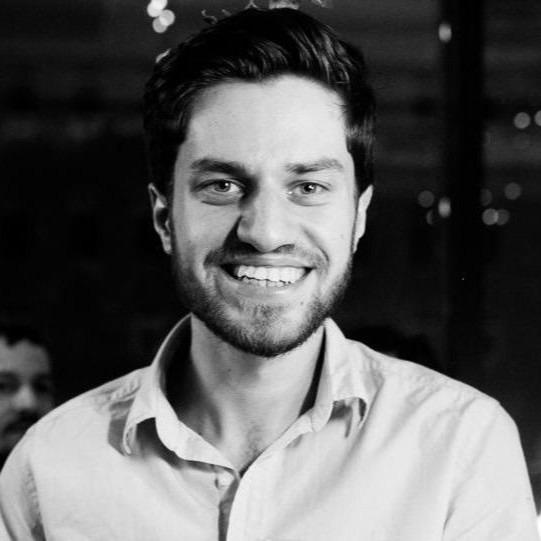
Human : Pavel Gertsberg
Location: London, UK
Domain: Entrepreneurship, Product Development, Marketing & Sales
Job Profile: Co-Founder/CEO – ClaimSorted & Fluffy, Serial Entrepreneur & Mentor
The First World War saw a world ravaged in conflict and loss, yet there were some human spirits which couldn’t be dimmed by the hopelessness around. One such soul that had seen the perils of war was the great German writer Erich Maria Remarques, whose anti-war masterpiece has continued to deeply influence the world of literature.
“We are little flames poorly sheltered by frail walls against the storm of dissolution and madness, in which we flicker and sometimes almost go out…we creep in upon ourselves and with big eyes stare into the night…and thus we wait for morning.”
― Excerpt from “All Quiet on the Western Front” by Erich Maria Remarques
Sometimes in the midst of great sorrow and despair, a shining glimmer of hope emerges from the depths of the unknown leading people to a new world. This is not just a story of survival but a reminder of how there is always a way out of the impossible with a little faith and resilience.
So, here’s introducing our next Human in the series, Pavel Gertberg, the Co-Founder of ClaimSorted and Fluffy is a serial entrepreneur from the United Kingdom. With a unique background in international relations and product development, his ventures have been backed by popular accelerators like Y-Combinator and TechStars. Coming from a long line of survivors who endured years of hardship in a war-torn era, his family’s strength and resolve has helped them rebuild their lives from scratch. He represents the next generation of exceptional founders paving the way for more empathy and equality in the business world.

Early beginnings in Britain
Pavel had a nomadic childhood travelling and living in different continents as far back as he could remember.
“I was one of those people who since they were a toddler lived in a variety of countries from East Europe to Middle East…I lived in Russia, Israel, in Switzerland and by the time I was 17, I ended up in the UK and studied here for four years,” he recollects about his unique experiences.
Out of all the places he has lived in, London holds a special place in his heart.
“I have been so welcomed and supported here. The United Kingdom is an amazing country, and my life would be very different if I wasn’t here. London is such a cosmopolitan town, and you never feel like an outsider and that’s the beauty of it. If anybody doesn’t know where they belong, try London. You will belong here,” he guides heartfully.
With his globetrotting early beginning, it was natural that he would end up in the field of international studies and would later major in African and International Studies at SOAS University of London.
“Taking up African and International Studies was unique but definitely an amazing experience. I even went on to work for a company doing strategic intelligence for the African region,” he remembers vividly.
Born to a family of doctors who started from scratch to build a wonderful career in their chosen profession, he heavily draws his inspiration from them.
He divulges, “My parents are doctors who built their careers from pretty much nothing and they worked hard to get to where they are. And this is what I always tell my team that if you try hard enough and are relatively doing smart things, you don’t even need to be brilliant, you will be in the right place sooner or later.”
Being around Medicos definitely influenced his early life and he recalls one of the many humorous incidents that happened in his school days.
“My dad was a GP, and my mom was a neurologist…so I remember when I was in 3rd grade, I had this huge book of all possible STDs that humans can get with horrible consequences. I brought these horrible pictures to school and all the kids were horrified. My mom was called to school because her son had shown a medical encyclopaedia of what could happen to people with syphilis. I didn’t even know what STD or Syphilis was,” he explains with a chuckle about how his mom would be called to school on most days.
It wasn’t just medical information that he was interested in, he remembers how he would question things a lot in his childhood.
“I was always fighting for rights…like if I feel my classmate was not treated fairly, I would make a semi-protest and gather my classmates and question the school policy. I would go to argue with the principal too if I felt something was wrong,” he explains of his early activist spirit.
Along his activist journey, his mom gave him the space and sensibility to see the difference between right and wrong.
He recounts his mother’s life lessons, “My mom was super amazing… she would point it out if I was wrong. But if I was doing the right thing, she would tell the principal or teacher that she believes I was right and that they can try to convince me otherwise. But she won’t be the one telling me that I am wrong. She was always fair about her opinions.”
His mom always advocated for his inquisitive nature and was one of his biggest supporters when it came to his passionate debates about historical data or government policies with his teachers. Many of the life lessons they have taught him have stayed on with him through the years.
“Her opinion was always that if you can’t convince your students, what kind of a teacher were you…well my parents taught me many things like this … like compassion, like how to try my best and how I need to help people”, he recalls.
It has sort of become normalized for the family to find fun and quirky ways to spend the holidays while travelling across the globe and some of their family traditions still hold even today.
He asserts, “They always had crazy ideas for the holiday. So, one new year we went for a tourist trip to North Korea. We did really weird things like that. We all live far apart, so New Year is a big thing where we all come together and always going somewhere to celebrate even now.”


Tryst with Business
His journey into the startup world started from his childhood where he recalls being born in the height of a transitionary period of the Soviet economy.
“It was an interesting time to be born in the 90s in Russia and for people who remember that era, it was a very entrepreneurial time when the Soviet Market had just opened up. Obviously, it was not tech entrepreneurship because no one really knew tech, but everyone was selling or buying. My family was always entrepreneurial,” he explains about learning the ropes of business.
Growing up in a transitionary phase meant that he got to experience the futility of a closed economy and the energy of an opened one. He admits that he is still amazed at how people could change their thoughts and way of life in a day and how that decade shaped up consumerism in the East.
“Before the economic boom, you can imagine growing up in a country where there was one type of shoes, one type of jackets, one type of cars…there is literally nothing, the market is just one product. And then the market opens up and you have hundred variations of shoes, computers and perfumes to everything. You live in this era of basically from zero to this huge market,” he recollects vividly on how everything changed overnight.
His first tryst with business came about when he was in 7th grade, he would buy bulks of chocolate bars and sell them at his school.
“I didn’t even know that was a business…I just saw a market need, that my classmates wanted to have chocolate bars, and this school didn’t have it. So, if I buy some in 5 cents and sell them for 7 cents, I could make some money,” he admits.
He recounts happy memories of his childhood and school life and firmly believes that he has lucked out in his early years. The education system in those times was based on memorizing and rote learning, but there was a teacher, Ms. Tatiana Petrovovna, who went beyond her way to teach the children to think on their own terms.
“I had amazing experience at school. There was one teacher, Tatiana, who taught us geography and biology…I’m not sure why she taught both. But yeah, when it came to writing our thesis or projects, she used to tell us to try to critically think about it. Whenever I have to do something, I often think about what she said…,” he explains an important lesson given to him.
That advice has stuck with him along his journey, and he tries to implement it in everything he does.
He expresses, “It is rare to not teach kids to normalize, to actually teach kids to think and that is the company culture that we set here. We do not teach; we never tell people what to do. We set targets but the whole idea of the company…of the culture is that people should think for themselves, not us telling them, make their own decisions and they need to challenge their thinking and ours too.”
Being in favor of critical thinking and a practical approach to learning, he shares his idea of what the education system needs to be for the modern era.
“I am not personally a believer of academic type of education, unless you want to become like a doctor or a lawyer. While I was at Uni, I was doing internships all the time, like marketing or sales and business development. I’ve worked as a private intelligence doing like reports on counter-terrorism in Sub-Saharan Africa. So, I went to that level. The amount of internships, the network and mentors have all been an amazing experience,” he recalls the varied job opportunities he took while at University.
One of his advices to young entrepreneurs is to not waste their time and effort in pursuing degrees that won’t help them further their objectives.
He counsels, “Academic qualifications, well, I believe that do not waste your time to go and do it. Instead go and work in anything, you know. It was in my internships that I got to have a real experience. College was a fun experience, but I remember my internships and mentors who taught me through that period much more.”
“I told my co-founder that I am not here for the money, I believe money is a by-product of you solving a problem and making a change, but it’s never the product. It’s about making value,” he explains how the ultimate goal is the value you create in the world.
Fluffy App
A project that has been quite dear to him is an app called Fluffy that was created for first time pet parents who want to raise healthy and happy pets and to provide them with educational content as well as product recommendations that are uniquely personalized to their pets.
“When I first got a pet, it was a struggle sometimes. Basically, it’s like having a kid, you fall in love with them in two weeks, you can’t live without them, but you have no idea how to take care of them. Even with kids…at least kids are humans, and you can draw references,” he explains passionately.
His earliest market insights came from his own experience and friends who had just started their journey of being a pet parent.
“When I started talking to friends who had pets, some of them were anxious to the level they were having panic attacks worrying that they’re doing something wrong. So, our idea is to bring peace of mind to 500 million pet owners around the globe and make the 179 billion pet care industry more affordable, simple and we want it to be fun,” he describes the mission behind Fluffy.
Mentorship is another factor that has shaped his career as a founder. He and his co-founder had applied to TechStars and that was where he met Saalim Chowdhury, the current MD of TechStars London and a legendary figure in the London Startup scene.
“I have the best mentor now, who is a part of the London TechStars Accelerator. He is a managing director who is absolutely an amazing person to talk to,” he divulges.
That meeting would lead to the beginning of ‘Fluffy’ becoming a household name among pet owners in the UK.
He recollects fondly, “It’s sort of a funny story. We applied to TechStars, and he basically messaged me super friendly like ‘Hey mate, Let’s have a chat. I am the MD of Techstars UK’. I thought it was a spam because MDs would have a team to do that kind of thing. When we met him, he had a dog at the time, and he was like I understand what you’re doing guys and you don’t need to explain it.”
The spirited entrepreneur explains how it is important to find mentors who can provide you a different perspective and method on the way you are solving a problem and not feed you with solutions.
“The biggest misconception is for people to think mentors will tell you what to do or what you should do. It’s your company, it’s your job to make decisions. We take advice but also, we have employees, we are responsible for their well-being. My advice is to never take someone who likes to tell you what to do,” he guides on the art of finding the right mentors.
Another mentor that has shaped his idea of team building is his long-time friend Mike Cooper, head of sales and a startup coach.
He expresses, “I met Mike when we were working together in one company, he was head of sales and I was head of marketing, and we grew that company from zero to millions. I learnt so much from him. He basically taught us how to build teams that you would love, and they hopefully will love you back. I do hope all my team loves me.”


An Entrepreneur’s Journey
On being asked what is it about startups that he would dedicate his time and life building one project to another.
“I love building startups…it’s like growing startups is my passion. And as you can guess by what we do, I love dogs. That is one of my weaknesses,” he admits unapologetically.
There is another passion in his life that he hopes he can explore someday.
He confesses, “Literature is something I love, and I have always wanted to write a book. I start something, but I never had time to finish. Stories about my grandparents who had difficult experiences, and their stories is something I do find inspiration from.”
Recounting the journey of his Jewish grandparents who lived in Ukraine and Belarus during the time of the Holocaust, he describes how they had to escape through unimaginable circumstances to survive.
“My grandparents had a really sad story where they lost half of their family and the other half had to immigrate…I would have to say, they manage to build something for themselves before the war and then they lost everything and had to start from scratch. They had nothing, they had to starve for periods of time, were sent to the Russian Gulag…I don’t really talk about it. It is quite sad…” his voice trails off as he recounts the horrors of war.
It wasn’t just the elders in the family who had to witness the worst crimes of humanity, but he recalls how even his aunts went through an endless nightmare in their childhood.
“Some of my aunts, who were then little kids, had to relocate to prison camps as there were diseases…Imagine like in the far north of Russia, you live in a hut where the temperature is -40, it’s not a friendly environment for you or your loved ones,” he recalls about the stories that sometimes still haunt him.
Amidst the great suffering and horror of war crimes, the family was determined to survive and break out of their desolate circumstances. They never let the shadow of the past tarnish the future they had.
He expresses, “I spend most of my childhood with my grandparents and they were amazing. They basically raised me, and they are the best people…unfortunately they passed away now. But they had amazing life stories, work stories, love stories, just beautiful stories but a tearful book…you can write like 10 books for some of them.”
One such heartfelt story that he remembers is from his grandmother who narrated him stories about the perils of war-time affairs.
“My grandma’s auntie met a guy from Moscow, who was actually one of the top people at the Communist party and for that time it was insane. She was a simple girl, and he fell in love with her. He had a wife, but they were separated. But she could never be with a guy who is married, and she had a cupboard full of letters. They were writing and sending poems to each other,” he gently gives an account of a love story frozen in time.
But the story had an unlikely ending and paints the picture of a wartime that had a fleeting hope of love flourishing for a brief moment of time.
He narrates, “The saddest part of this story is that he was coming from Moscow to my hometown every week by plane and at that time it was phenomenal. Most people had never flown by planes in the Soviet Union and doing that every week was unbelievable. At one point, he got throat cancer, and he couldn’t speak anymore, but they were still speaking through their love letters…he was dying but…he passed away and she never married anyone.”
Among the many stories of heartbreaks and separated families, there were some lucky ones who were able to find love and nurture it.
“In Soviet Union in those times, it was all about collectivization where you know everyone would be a part of the government project for something and if you were a student, they would like once a year send you to the fields to help farmers collect potatoes, collect vegetables, fruits…doesn’t matter, so in my region it was potatoes. My mom and dad met in one of those potato harvesting exercise,” he recounts warmly.
That was the beginning of his family’s quest to finding a way back to normalcy and rediscovering a hope for a better future. And he admits how not giving up is a trait passed down over generations.
“No matter what …If you try hard enough, you will figure something out,” he asserts.
The past has indeed shaped Pavel’s journey from a young, spirited activist championing human rights and empathy to a seasoned founder who is here to do things his own way.
He describes his vision for collaborative business projects, “It’s a relatively new concept called DAO or Decentralized autonomous organization. I really believe in the coming years, maybe 5, maybe 10 years, the conventional idea of allocating equity not just to employees but to actual customers…giving the ability to vote on some of the things is going to be really cool and it opens up a lot of opportunities to create better products.”
His main objective now lies in creating products that are user-centric and whose features will depend largely on the people using those products.
“It has a practical utility. Today’s problem is like a lot of brands do not have good brand ambassadors. What’s the best way than to actually give them ownership in the company and being able to decide on some of the features you want to build, your growth plans, your choices…It might be controversial now, but I feel like in the coming years it will happen,” he adds enthusiastically.


The future for Dreamers
Having recently made waves in the startup world by getting into Y-Combinator and raising millions of funds for his new startup – ClaimSorted, the future has never looked brighter for him.
“The most inspirational thing for me is the team…what I have learnt so far of starting a startup and having a strong growth is that it’s much more fun than you think, more easier…it is stressful indeed. But if you are also passionate about the project, you will enjoy it like every day,” he asserts positively.
On his recommendation to founders, he counsels how rather than coming up with an imaginary problem to solve, they should focus their time and energy to identify an existing issue that exists around them.
He guides, “If you believe that there is a problem in the market and not if you came out with a problem. If there is a real problem, it might look difficult, it might be like super complicated, but if there’s a problem in the market that annoys you… go solve it. It’s relatively much easier than you think.”
His own journey of starting ‘Fluffy’, with his co-founder and long-time collaborator German Mikulski, started out from finding a need in the pet-care industry.
“We were just two immigrants, me and my co-founder German …even we didn’t how know we could do it but if you are solving a real problem, you will get a lot of people who will buy into what you do, you will get customers, you will get into like accelerators…if investors see that you solve a real problem – that’s it, so don’t be afraid. Building a unique problem is very difficult but building a product that solves the problem and helps people is relatively easy,” he recollects.
For anybody starting out in their entrepreneurship journey, he explains how just following your gut feeling is sometimes the right way.
“No matter what … it taught me a lot about, you know, if you struggle, if you try hard enough, you will figure something out,” he acknowledges.
The past has indeed shaped Pavel’s journey from a young, spirited activist championing human rights and compassion to a seasoned founder who is here to do things his own way. This infectious optimism is what drives passionate creators to mark their footsteps in the sands of time.
There is a famous Belarusian proverb, “Загляне сонца i ў наша ваконца,” which loosely translates to
“The Sun will look in our window too.”
It’s a perfect anecdote of how Pavel and the generations before him have kept their faith and hope alive all these years to sail through life’s testing waters.
His moment of sunshine has finally arrived as the determined founder charts his own path in the world of innovators, healing the wounds of the past and shining a light on the future ahead.
We do believe fervently that this is just the beginning of a new era of founders with a heart of gold.


Connect with us on